

Ensuring dimensional accuracy throughout production is often more challenging than it appears. A design may be flawless on paper, yet deviations occur during machining, welding, molding, or assembly. These deviations lead to gaps, misalignment, poor fitment, structural weakness, and failed quality audits. When a project suffers from repeated non-conformance, costs escalate and delivery schedules collapse. Engineering teams are left troubleshooting repeatedly, while production slows and rework piles up.
These issues may not always be obvious at the beginning. Minor dimensional drift between batches, undetected fixture wear, or operator interpretation differences often accumulate into larger quality failures. Over time, small measurement inconsistencies turn into rejected batches, warranty claims, or product recalls. Stakeholders become frustrated, teams lose confidence, and the project requires tighter control and traceability.
A Checking Fixture provides a robust path toward dimensional stability. By holding a component in a fixed, controlled position, it enables repeatable measurements and accurate verification against design intent. This proactive approach improves quality control, accelerates inspection time, and standardizes measurement across production cycles. Once implemented, defects are detected earlier, processes begin stabilizing, and the product outcome becomes consistent and trustworthy.
Contents
show
What Is a Checking Fixture?
A Checking Fixture is a precision-engineered tool used in manufacturing to verify whether a product or component meets the required dimensional specifications. It securely holds a part in a controlled position, enabling inspectors or automated measuring equipment to review key dimensions, geometric features, tolerances, and alignment.
This ensures that every part conforms to required standards before moving forward to assembly or shipment. A Checking Fixture helps prevent measurement discrepancies and creates an environment where inspection results remain consistent regardless of operator or production batch.
Why Checking Fixtures Are Critical in Manufacturing
A stable inspection process contributes directly to production reliability. Checking Fixtures serve as a critical quality assurance tool in automotive, aerospace, heavy machinery, medical device manufacturing, and consumer product industries. Their primary function is verifying form, fit, and geometry while eliminating subjectivity.
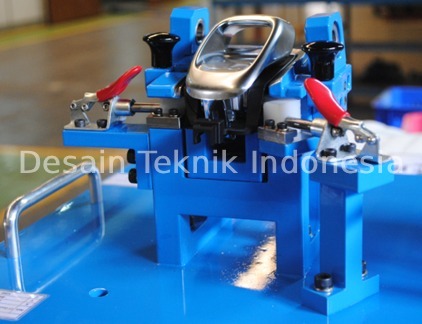
Instead of relying solely on manual measurement tools such as calipers or CMM verification for every unit, the fixture provides a standardized rapid inspection method. This leads to faster feedback loops, improved quality control strategies, and reduced risk of dimension-related failures.
Types of Checking Fixtures and Their Applications
Checking Fixtures are available in different configurations depending on the measurement requirement. Some are designed strictly for dimensional holding and visual checks, while others incorporate sensors, probes, automation, and adjustable datum setups. Common types include:
- Attribute Checking Fixtures: Designed for go/no-go or pass/fail evaluation.
- Functional Fixtures: Used to simulate real-world assembly or operational conditions.
- Geometric Fixtures: Validate surface profile, form tolerances, GD&T checkpoints, and critical alignment.
- Modular Fixtures: Reconfigurable for multiple parts or evolving design revisions.
Each type plays a role depending on part complexity, production volume, tolerance level, and required measurement repeatability.
Key Elements of a High-Quality Checking Fixture
A checking fixture must reflect the original CAD model as precisely as possible. Its design typically includes base plates, datums, clamps, inspection pins, bushings, sensors, gauges, and reference points aligned to GD&T principles. Materials such as aluminum, steel, or composite structures are selected based on durability and thermal stability.
To further understand structural elements and supporting hardware, reviewing resources related to checking fixture components provides deeper insight into materials, modular elements, and mechanical assemblies.
How a Checking Fixture Improves Quality Assurance
A Checking Fixture streamlines inspection by standardizing procedures. Instead of measuring every feature manually, the operator positions the part in the fixture and activates clamps or reference points. This reduces measurement error and accelerates validation.
The fixture also supports early detection during prototype and pilot runs, helping engineers validate manufacturability. Over time, the fixture becomes a reference process benchmark used throughout mass production.
Designing a Checking Fixture: Engineering Considerations
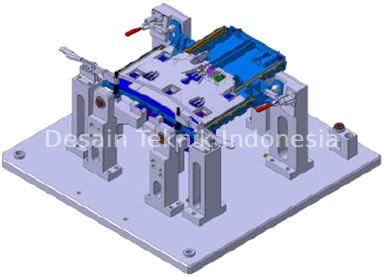
Designing a Checking Fixture requires strong understanding of GD&T principles, part behavior, production tolerances, and material stability. Engineers begin with digital simulation to predict alignment, checking points, and functional ergonomics.
Critical design factors include operator accessibility, calibration feasibility, traceability, thermal stability, and long-term wear. Once manufactured, the fixture must undergo validation, correlation checks, and certification before use.
Manufacturing and Approval Process
The build process includes CAD modeling, material machining, precision grinding, laser marking, and assembly. After fabrication, the fixture undergoes rigorous metrology validation using CMM, scanning systems, or gauge repeatability and reproducibility studies. Documentation such as fixture inspection reports, compliance certifications, and operational manuals are prepared before handover. Only then is the fixture approved for use in production.
Maintenance and Calibration of Checking Fixtures
Over time, repeated contact, environmental exposure, and operational handling may create dimensional shifts. Therefore, maintaining calibration records, cleaning procedures, fixture storage requirements, and routine inspection schedules is essential. Predictive maintenance strategies help extend lifespan while preserving accuracy and consistency.
Industries That Rely on Checking Fixtures
Checking Fixtures are utilized in automotive body manufacturing, engine assembly, aerospace fabrication, consumer electronics, heavy industrial equipment, precision machining, and high-volume molding processes. In these applications, reliance on consistent measurement ensures compliance with strict dimensional tolerances and regulatory demands.
Conclusion
A Checking Fixture plays a pivotal role in creating dimensional consistency, improving quality assurance, optimizing inspection time, and reducing manufacturing defects. When implemented properly, it becomes a crucial link between engineering intent and real-world production results. Organizations investing in accurate fixture development gain measurable improvements in product reliability and operational efficiency.
For project discussions, quotation requests, fixture customization support, or engineering guidance, you may reach out directly contact our engineering team